

5 dog breeds from Mexico
Fancy a pup from south of the border? Explore these Latin American dog breeds!
Summary
Beyond cuisine and celebrations like Cinco de Mayo, Mexico’s rich heritage includes unique native dog breeds. While Chihuahuas are well known worldwide, lesser-known Mexican breeds have equally fascinating histories and traits. Here’s what makes these dogs stand out.
1. Chihuahua
First on our list is the smallest dog breed from Mexico: Chihuahuas are loyal, charming dogs that will typically grow attached to one person. Despite their tiny stature, they make excellent guard dogs and good family dogs because of their alert and outsized personalities.
Throughout history, Chihuahuas have had numerous roles, but people often bred them to do what they do best: be lovable, pint-sized companions. Watch their food intake—Chihuahuas are prone to obesity, although they are healthy dogs overall.

Facts about the Chihuahua
- Breed group — Toy breed
- Intelligence — High
- Barking — Highly vocal
- Life span — 14-16 years
2. Xoloitzcuintli
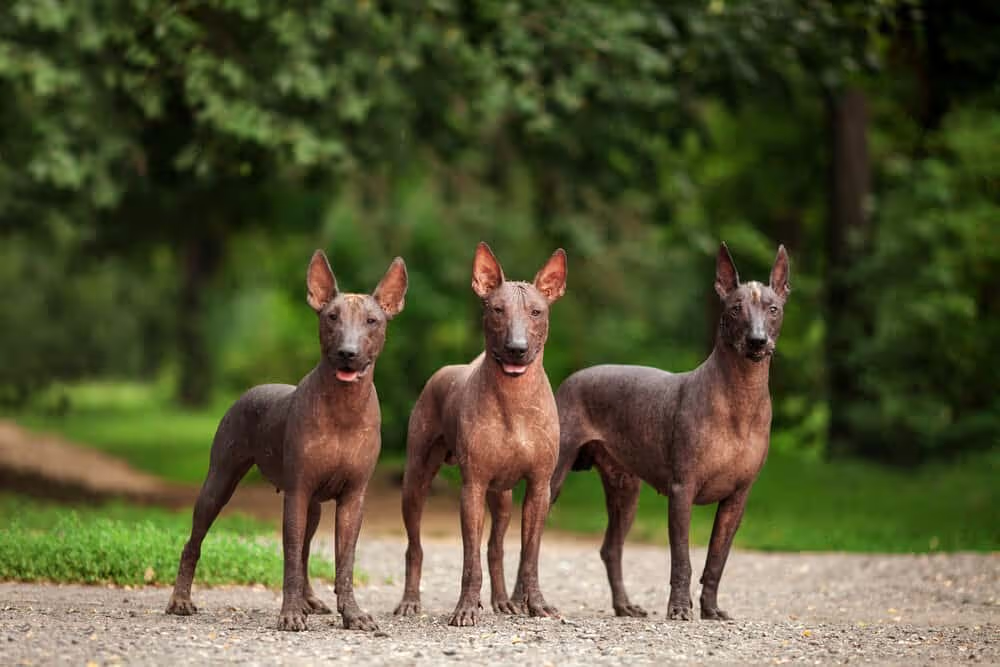
Easily one of the most recognizable dog breeds by dog lovers, Xoloitzcuintli (pronounced “show-low-eats-QUEENT-ly”) gets its name from two Aztec words: Xolotl for the Aztec god of lightning and death, and itzcuintli for dog. These medium-sized dogs come in a hairless variety or a short, flat coat. And while small kids may test their patience, the Xoloitzcuintli (Xolo for short) is a fantastic family pet, thanks to its lovable yet watchful nature. The Xolo is one of the oldest dog breeds in the world.
👉 Perhaps unsurprisingly, a dog with such a unique appearance has its own club, the Xoloitzcuintli Club of America, although the Chihuahua is still Mexico’s reigning national treasure.
One thing prospective dog parents should consider: Xolos are prone to skin issues due to sunburns and fleas, patellar luxation, or a slipped kneecap, which may require surgery if severe.

Photo by Xolomania (CC BY-SA 4.0)
Facts about the Xoloitzcuintli
- Breed group — Non-sporting breed
- Intelligence — High
- Barking — When necessary
- Life span — 13-18 years
3. Calupoh
A hybrid of a Xolo and the gray wolf, Calupohs are medium-sized, strong dogs with black coats, although some may be silver or white and black. While they have traits of their wolf ancestors, domestication led Calupohs to become patient and loyal family dogs with striking wolf features, including gorgeous yellow or orange eyes.
4. Chamuco
A newer breed, the Chamuco is a cross between the American Pit Bull Terrier, Staffordshire Bull Terrier, and, as some speculate, the Boxer. The now-extinct Mexican Bulldog also contributed to the breed. Chamuco means devil in Spanish, and while they have strong personalities, they can be devoted pets that are great with kids and protective of their family when well-socialized.
Mexico’s stray dog population contributed to the development of the Chamuco breed, which, unfortunately, is frequently the victim of dog fighting due to its durable and muscular body type.
5. Chinese crested
Despite the name, Chinese Crested dogs may have origins in Mexico—with the Aztecs, to be exact. Dogs that fit their description date back centuries in multiple cultures, including the Aztecs, and had many roles in the different cultures they helped shape. As trade routes connected continents, these little, hairless dogs became popular on Chinese trading ships, which led to their name.

Facts about the Chinese crested
- Breed group — Toy breed
- Intelligence — High
- Barking — Semi-frequently
- Life span — 13-15 years
Mexico’s stray dogs
Certain dog breeds like the Calupoh and Chamuco are due to natural hybridization among stray dogs. For some areas, this isn’t a good thing — a lack of affordable spay and neuter programs harms these breeds, leading to overpopulation and safety issues for communities. This is a problem in the United States as well. Like communities in the U.S., Latin American countries are taking measures to help curb the number of stray dogs in their cities.


